欢迎来到 [东方港湾展览]
, 进入
2026宁波国际汽车零部件及售后市场展览会
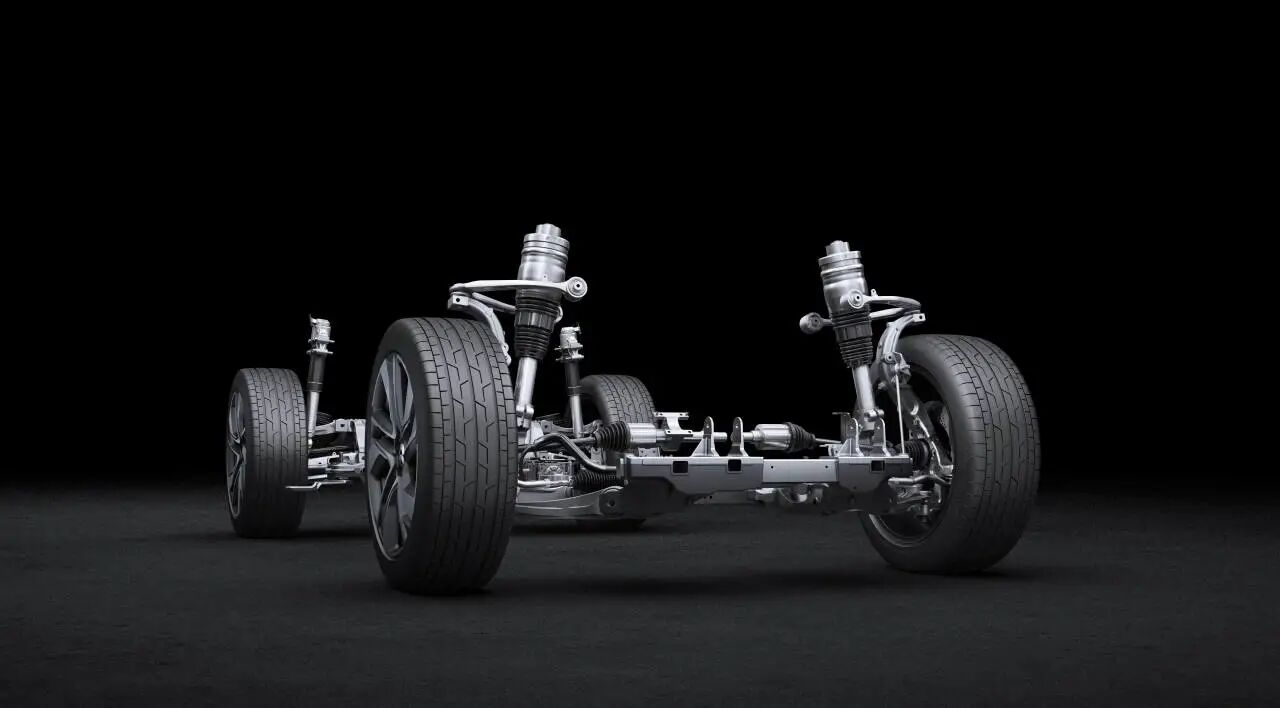
In May 2026, Li Xiang, founder of Li Auto, publicly stated that chassis technology “may be the last shortcoming holding back Chinese automakers from dominating the global market.”
This viewpoint quickly sparked heated industry discussions. While Chinese OEMs have taken world-leading positions in intelligent cabin systems, advanced driver assistance systems (ADAS), and new energy powertrains, the question arises: is chassis engineering the biggest technical barrier standing in the way of independent brands’ global expansion? The topic calls for an objective review of existing gaps, as well as a close look at profound transformations underway within the industry.
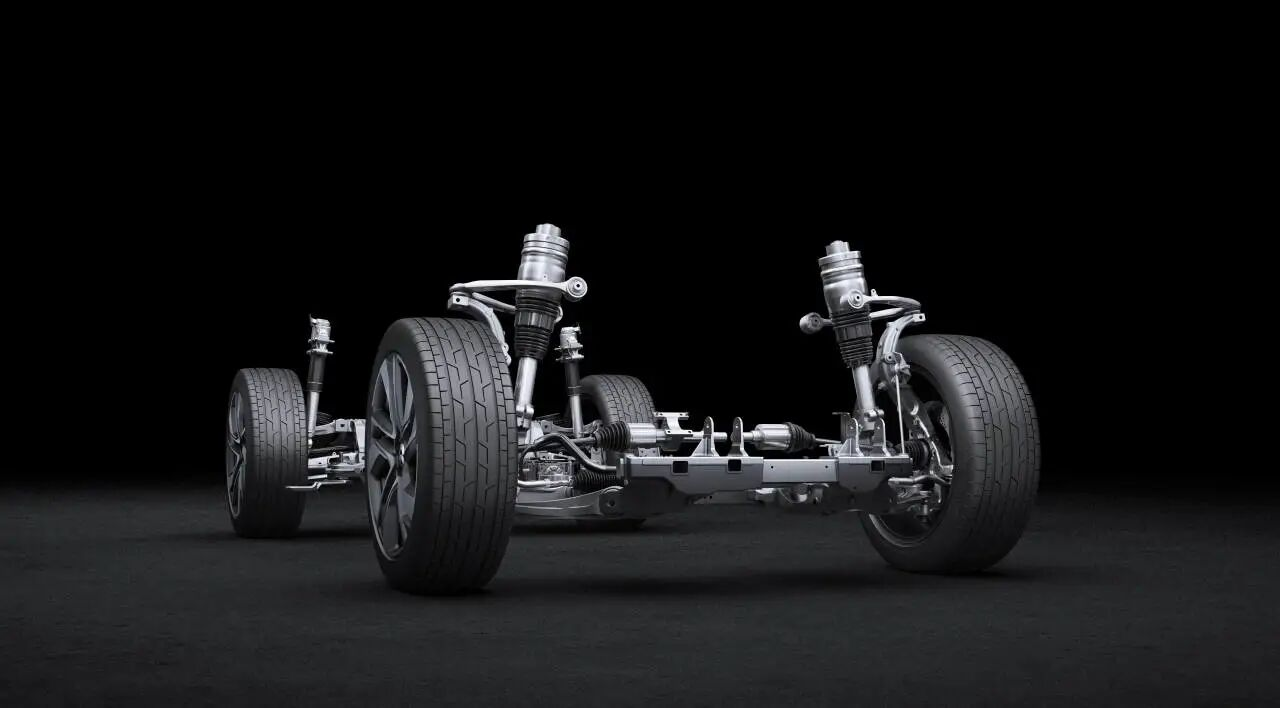
Image source: NIO
Li Xiang’s assessment is not an isolated opinion among industry insiders. Many specialists point out that Chinese new energy vehicles have made steady strides to the global forefront in intelligent cockpits, ADAS, and electric drive systems in recent years. However, when it comes to chassis engineering — a traditional core strength of legacy luxury brands — a clear gap still exists compared with top international luxury marques such as Porsche and Ferrari.
The divide first manifests in the depth of technical iteration. Most domestic independent brands still focus on semi-active suspension solutions including air suspension and CDC dampers. Industry research data shows that around 1.272 million sets of air suspension systems were fitted on passenger vehicles in China in 2025, representing a penetration rate of only 5.4%, mostly limited to models priced between RMB 200,000 and 300,000. Large-scale mass adoption of fully active suspension remains in its early stage: an estimated 130,000 sets will be installed nationwide in 2026, with projected growth to 590,000 sets by 2030.
Line-controlled chassis technology presents another major challenge. Replacing mechanical and hydraulic connections with electrical signals for vehicle control, line-controlled chassis serves as a critical execution foundation for Level 3 and higher autonomous driving.
2026 marks a policy turning point for the sector, as two new national standards GB 21670-2025 (braking systems) and GB 17675-2025 (steering systems) officially took effect, removing regulatory barriers for mass production of electro-mechanical brakes and steer-by-wire systems.
Nevertheless, technical maturity still lags behind demand. EHB (electro-hydraulic brake) solutions dominate current brake-by-wire applications, while full transition to EMB (electro-mechanical brake) will take years. Steer-by-wire has been deployed on flagship models from new energy startups, yet its safety redundancy design and mass production consistency still face strict tests.
A third dimension of chassis competition lies in building software-defined chassis capabilities. Huawei’s Tulong Intelligent Chassis Platform adopts a full-domain integrated architecture with four core features: active perception, central control, intelligent reasoning, and autonomous learning, shifting control logic from post-response to pre-emptive adjustment. BYD’s Yangwang U7 deeply integrates the Yun-Z fully active suspension with its four-motor four-wheel drive technology. The full perception-to-execution loop takes merely 5 milliseconds, enabling fully digital coordinated control of vehicle body posture across six degrees of freedom in vertical, longitudinal and lateral directions. These breakthroughs prove Chinese carmakers are rapidly catching up in intelligent chassis development.
Despite tangible gaps, China has seen rapid progress in technical accumulation and industrial collaboration across chassis technology in recent years, driven by two core development tracks: breakthroughs in localized upstream component supply chains, and systematic technical R&D at vehicle OEMs.
On the supply chain front, air suspension serves as a prime example. Between January and February 2026, 221,000 sets of air suspension were installed on Chinese passenger vehicles. The top three suppliers — Tuopu Group, Konghui Technology and Baolong Technology — are all local manufacturers, together capturing over 92% of the domestic market. This stands in stark contrast to the market landscape five years ago, when foreign giants including Vibracoustic and Continental dominated the air suspension sector, highlighting remarkable achievements in domestic substitution for core chassis components.
At the OEM level, innovations ranging from system integration to original architecture development are emerging at a fast pace. BYD continues to expand its Yun suspension product portfolio: the Yangwang U7 carries the Yun-Z fully active suspension, while a Denza concept sports car equipped with Yun-M features China’s first fully self-developed steer-by-wire system.
Meanwhile, Huawei’s digital chassis ecosystem is accelerating mass rollout. The Zunjie S800 carries the industry’s first domestically developed intelligent digital chassis platform — the Tulong Platform with full-domain integrated architecture, delivering a minimum decision link latency under 1ms, paired with dual-chamber air suspension, continuously variable damping shock absorbers and multi-wheel steering control. The Xiangjie S9T deploys Tulong Platform 3.0, achieving an elk test speed of 83.3 km/h.
The Li Auto L9 Livis comes with a fully-fledged line-controlled chassis, incorporating steer-by-wire, electro-mechanical brake-by-wire and rear-wheel steering, with continuous chassis logic upgrades supported via OTA.
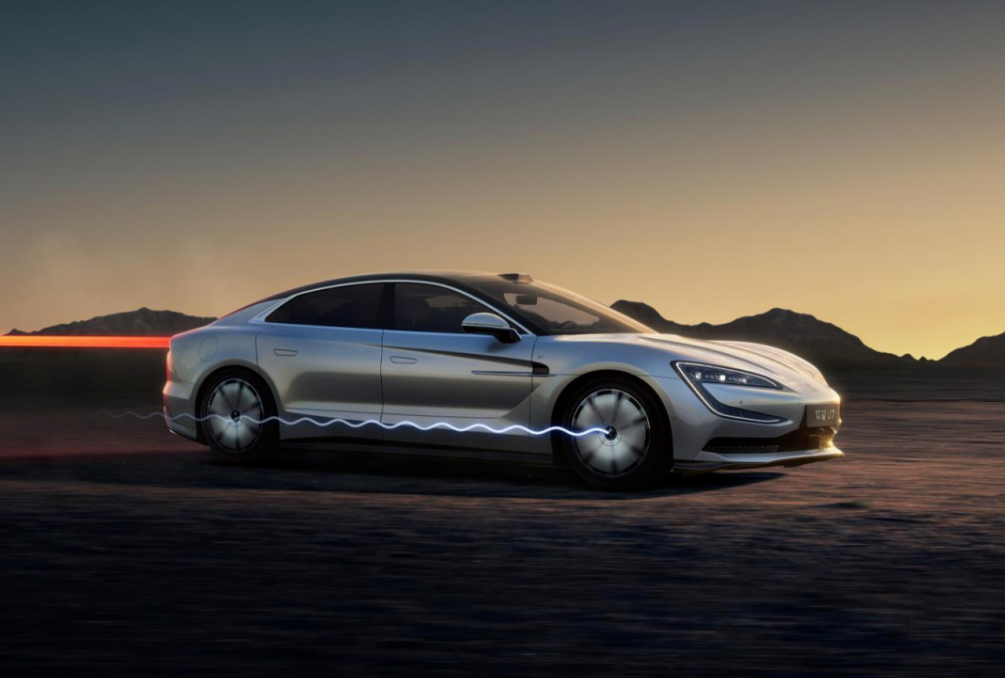
Image source: BYD
China’s chassis technology system is undergoing a critical shift from being constrained by foreign suppliers to full independent control, covering market share, technical reserves and supply chain influence. Though chassis engineering remains the “final technical checkpoint” for Chinese auto brands to globalize, requiring further progress to close the gap, the industry’s accelerated R&D investment and fast catch-up trajectory are clearly visible.
For Chinese automotive manufacturers, the real test lies not in developing a single vehicle with class-leading chassis performance, but in establishing a sustainable, iterable full-industry chassis technology ecosystem covering the entire supply chain.
Declaration: This article comes from Gasgoo. If copyright issues are involved, please contact us to delete.

 22
22