欢迎来到 [东方港湾展览]
, 进入
2027宁波国际汽车零部件及售后市场展览会
On the evening of October 15, CCTV-2's Economic Information Broadcast reported on the deployment of humanoid robots in automotive parts production lines in Hangzhou, Zhejiang Province. At Jiangnan Science and Technology City, humanoid robots have officially entered "production mode."
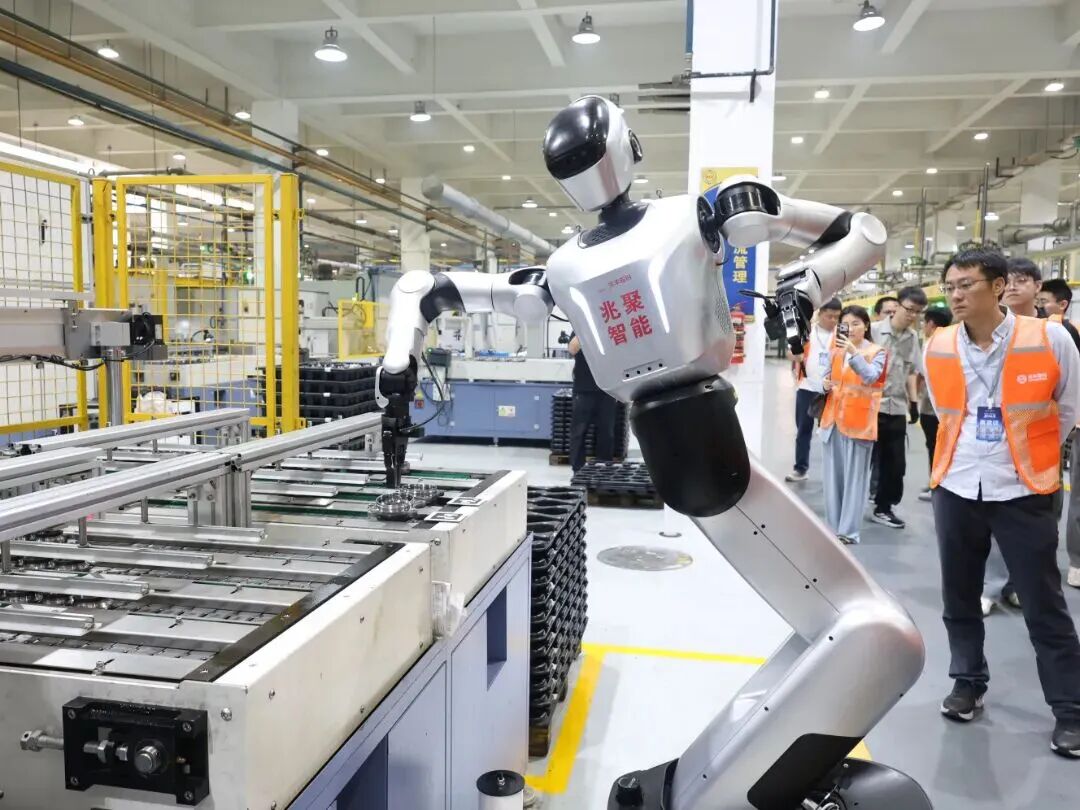
On October 15, Zhaofeng Co., Ltd. and Leju Robotics jointly unveiled their "Embodied AI + Small Automotive Parts Loading" solution in Xiaoshan, Hangzhou. A total of 15 humanoid robots have been deployed for routine operations on Zhaofeng's automotive parts production lines.
According to the two companies, this is the industry's first replicable real-world training and demonstration project for embodied AI, marking a significant transition for humanoid robots from pilot testing to regular industrial operations.
Following its comprehensive "Machine Replacement" initiative in 2013 and the development of a fully digitalized factory in 2018, Zhaofeng has once again positioned itself at the forefront of industrial innovation by integrating embodied AI robots into daily manufacturing operations.
At Zhaofeng's production facility, the 15 humanoid robots operate in narrow and complex environments, performing more than 10 sequential movements to accurately grasp and handle small components. They complete the entire workflow of preparation, material picking, transportation, and loading.
Each operating cycle takes less than 40 seconds. The robots are compatible with 15 workstations and more than 10 types of components, achieving a stable 98% task success rate. To date, they have accumulated approximately 1,000 operating hours and assisted in the production of over 60,000 automotive components.
Behind these achievements is a comprehensive system covering development, deployment, operation, data management, and safety.
A modular skill-development toolkit enables developers to combine functions like building blocks, reducing development cycles from several months to just a few weeks. A multi-robot scheduling platform allows skills to be synchronized across devices with a single click, shortening deployment time to just a few hours.
Meanwhile, a one-click material request system can activate multiple robots simultaneously. Real-time operational data is continuously collected and transmitted, while integrated safety modules monitor dropped components, collisions, and excessive operating speeds to ensure reliable performance.
With 15 robots operating simultaneously, the production line has established a scalable system for parallel data collection, capable of generating more than 40,000 data records per month. As operational data continues to accumulate, the robots can continuously improve their capabilities, becoming increasingly intelligent through real-world experience.
The dataset collected from these real-world robotic operations has now been donated to the OpenLET community under the OpenAtom Foundation, helping lower research and development barriers and accelerate innovation across the industry.
Source: Jiangnan Science and Technology City
Disclaimer: Portions of the content and/or images in this article are sourced from enterprises or publicly available online resources. If any material infringes upon your copyright or other legal rights, please contact us for prompt removal.

 8